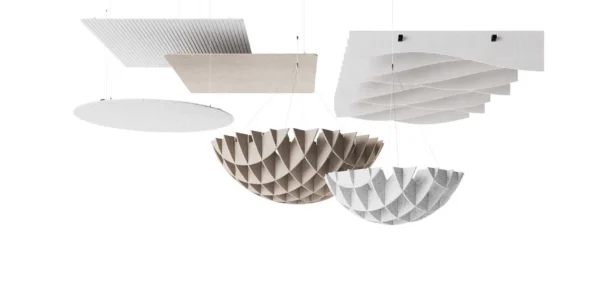
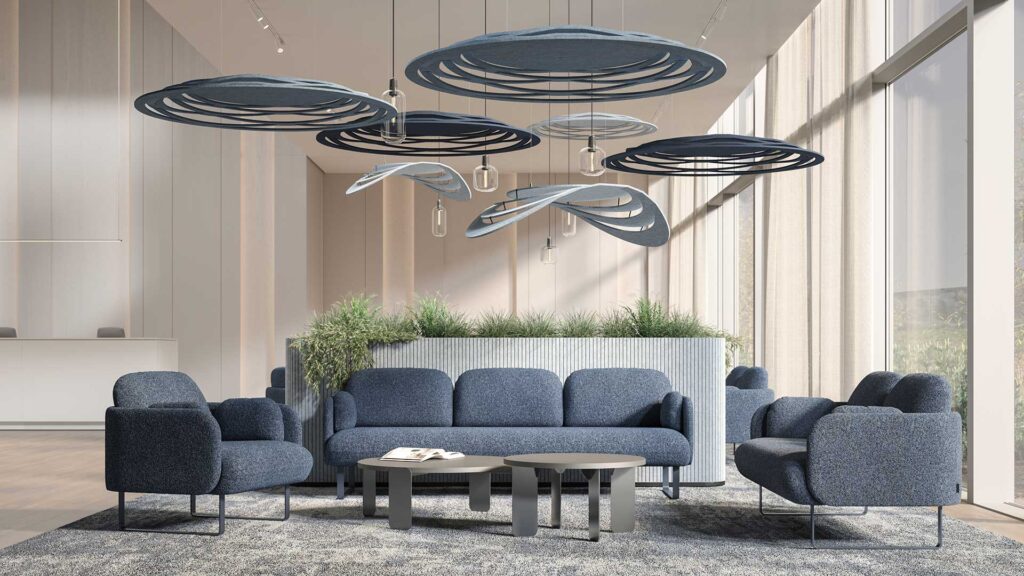
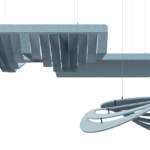
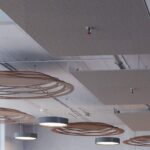



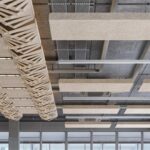



Five shapes for flexible ceiling compositions
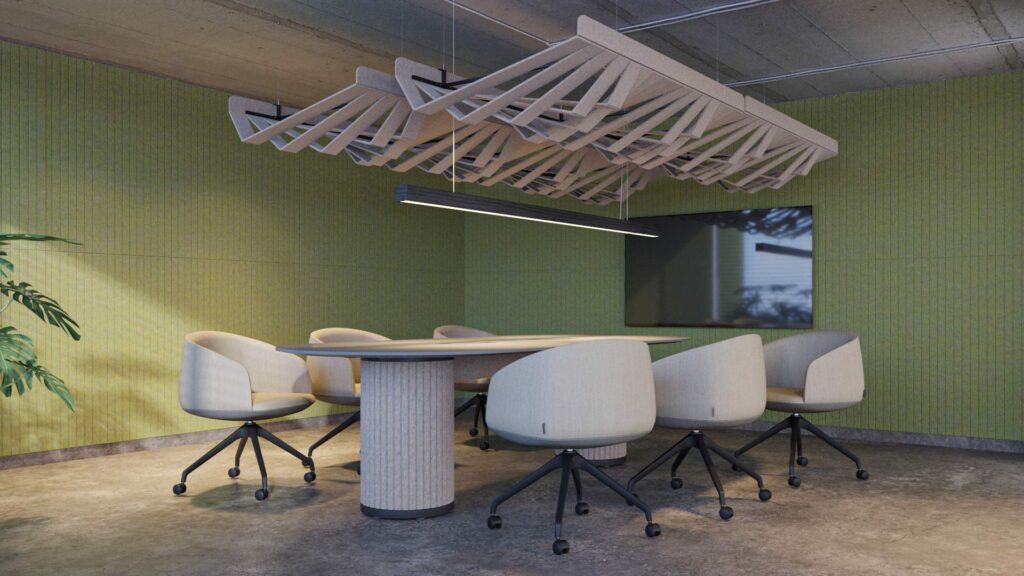
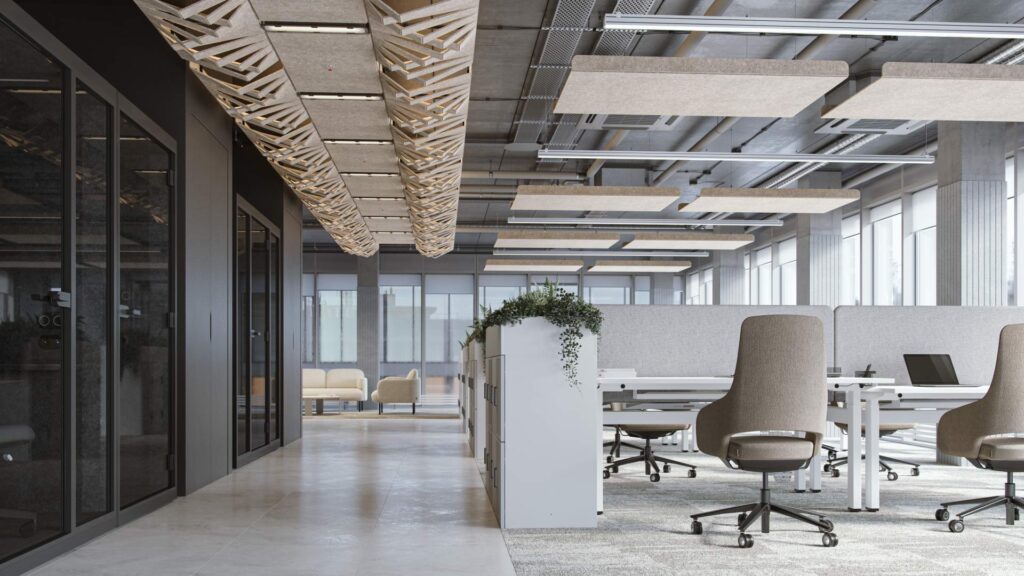
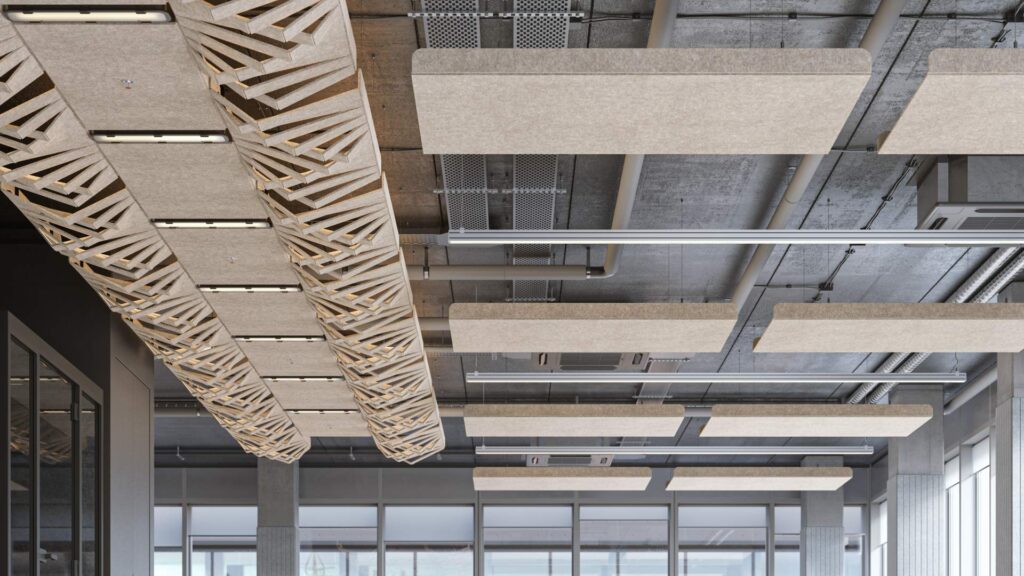
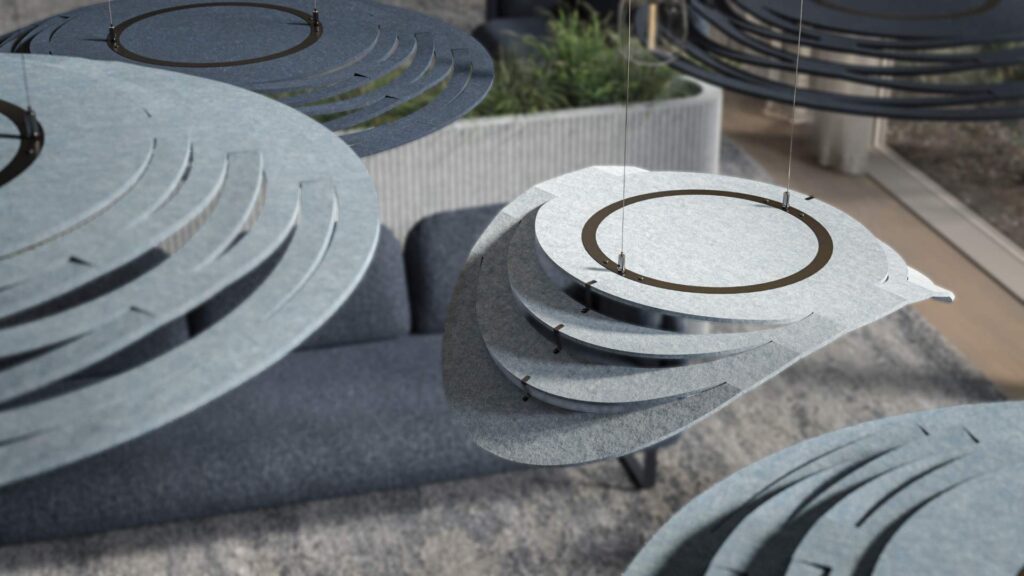
The KITE collection includes ceiling acoustic panels in several shapes — from laconic flat and rectangular solutions to round, oval and more expressive three-dimensional options.
A design inspired by the movement of a kite
The idea of the collection was born from observing kites soaring in an air current. Under the influence of the wind, the flat shape seems to come alive, gains volume and begins to interact with the surrounding space.
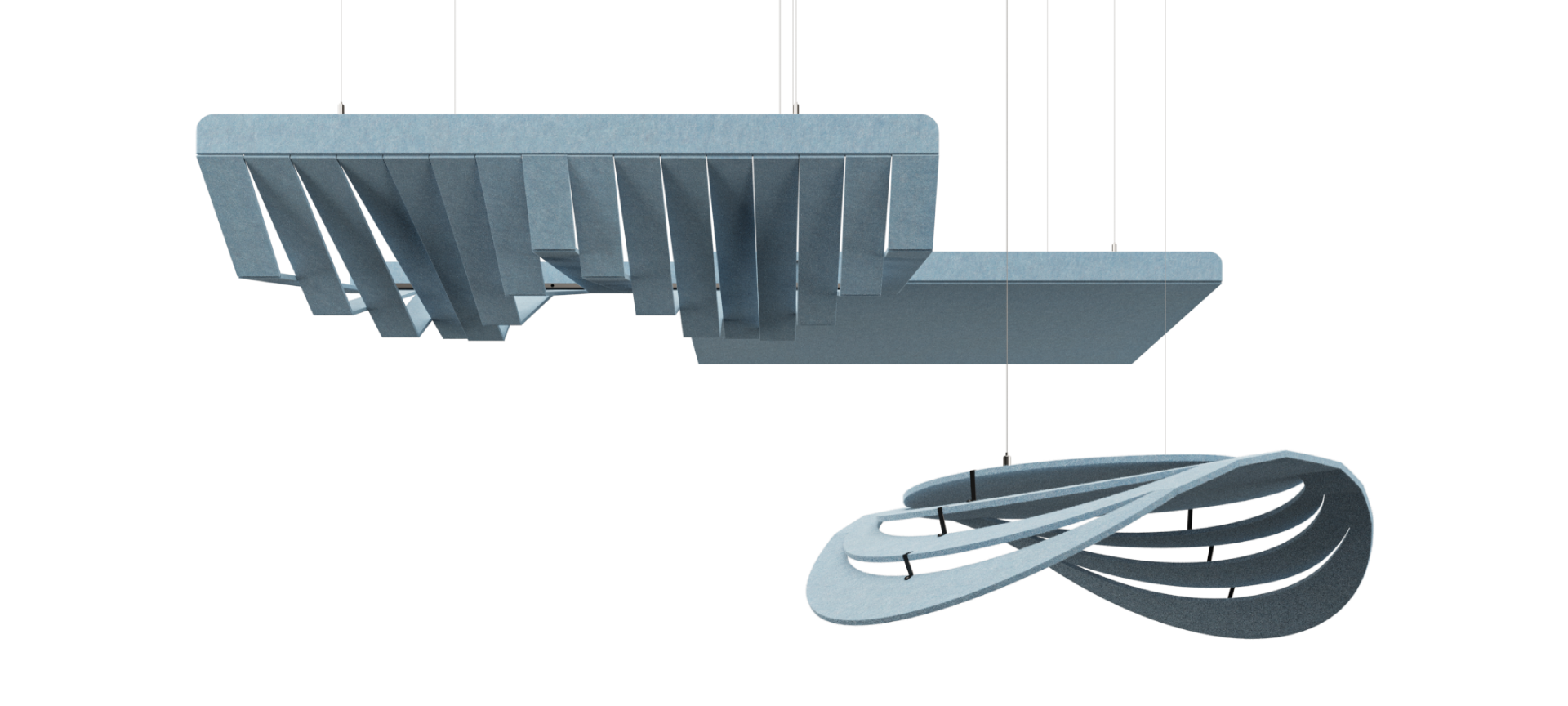
This principle formed the basis of the KITE design. The ceiling panels have a three-dimensional shape, thanks to which they work not only as an acoustic element but also as an expressive interior detail. They interact with light, air and sound, creating a feeling of lightness and movement.
When engineering enhances design
KITE panels are made of flat PET felt, which, with the help of a special cutting and bending technology, is turned into a three-dimensional structure. The result is a spatial surface with expressive depth and a subtle play of light and shadow.
But this shape is not just a design gesture for the sake of beauty. The three-dimensional structure increases the surface area of the panel, thanks to which sound is more effectively absorbed and scattered. This is especially important for open space, meeting zones, corridors and other premises where noise quickly accumulates and hinders normal work.
A responsible solution for modern spaces
The main material of the KITE collection is PET felt. It contains more than 50% recycled plastic, so the panels support more responsible use of resources and are suitable for projects where the eco-friendliness and durability of materials are important.
In addition, the panels comply with fire-safety class B-s1, d0 according to the EN 13501-1 standard, which makes it possible to use them in commercial, office and public spaces.
Application in offices and public interiors
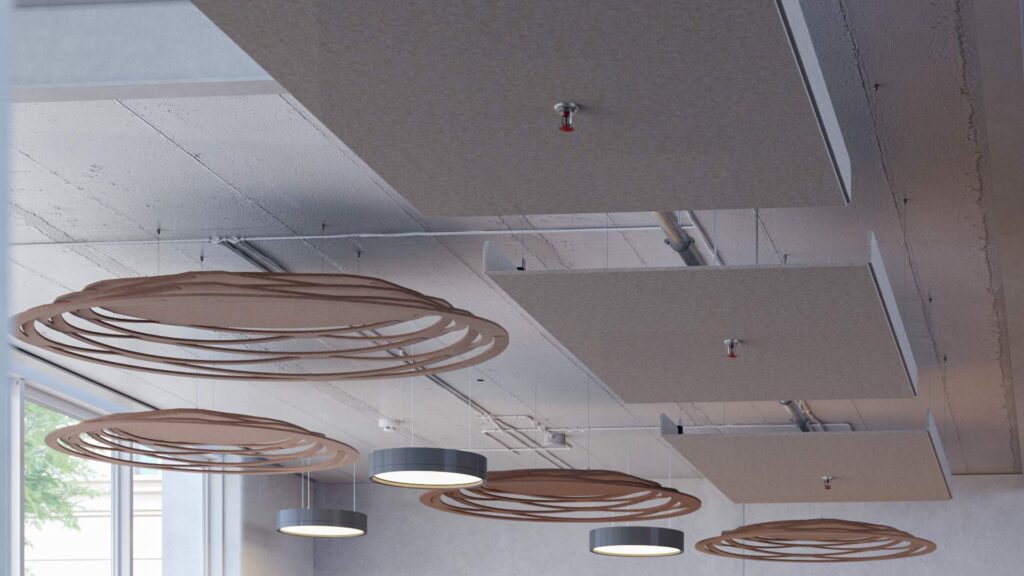
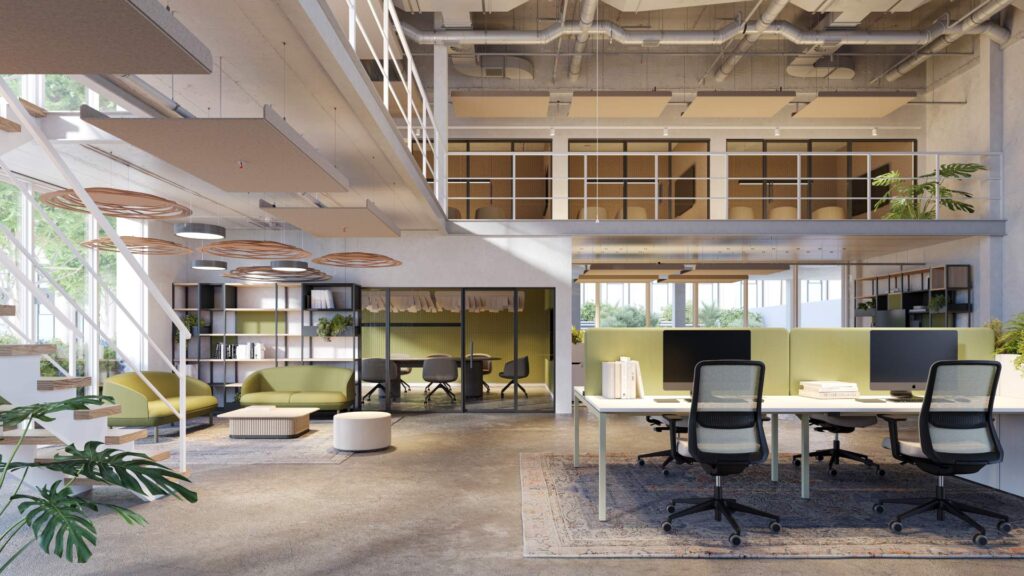
The KITE ceiling panels easily adapt to different types of premises. They are suitable for individual work zones, open space, meeting rooms, corridors, lobbies, receptions, cafés, libraries and other public spaces.
A variety of shapes and connection methods gives designers the freedom to create acoustic compositions of different sizes and configurations. The panels can be suspended separately or combined with one another, forming calmer, more balanced and visually expressive zones.